
10 step birth methods
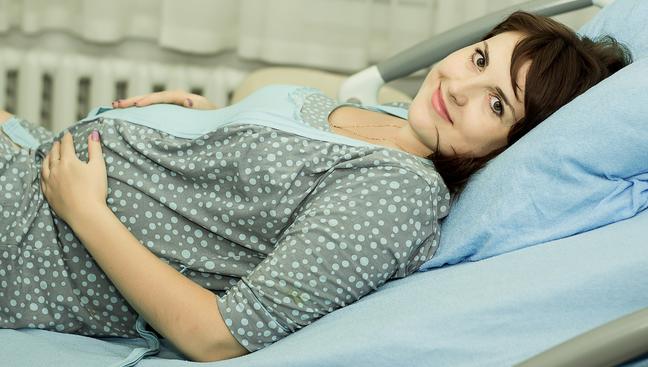
One of the most important decisions to be made as the time of birth approaches is which technique will be correct for birth. You should obtain birth information on this subject, which is closely related to your psychology as well as your constitution, and you should evaluate it well in order to make the right decision. Mothers who are usually between the ages of 18-36 and who will give birth for the first time are more likely to have a normal delivery. However, this option can be risky for those who will become mothers at a younger or older age. In addition to listening to your inner voice, it is recommended that you determine the most ideal delivery method by consulting your doctor. Here are the birth methods that you can determine according to your psychology, physical condition and preference:
1. Step by Step Normal Birth
When the necessary conditions are fulfilled, it is called vaginal delivery and under normal conditions.
When the time comes, real labor contractions are felt. Although they were infrequent at first, the pain that comes at regular intervals gradually becomes more frequent, longer-lasting and more severe.
Although there is no certain standard, you should contact your doctor when regular pains that come every hour and last for 15-20 seconds begin.
Normal birth may be spontaneous or may require interventions such as vacuum or forceps.
2. The Three Stages of Birth Step by Step
In the first stage of labor, the cervix opens immediately after the onset of pain. The opening length is up to 10 cm.
The cervix must be fully dilated for the second stage of labor to begin.
In this second stage, which lasts until the baby comes out, the baby, pushed by strong and regular contractions, easily passes through the thinning cervix and reaches the vagina.
The third and final stage of labor begins with the expulsion of the baby and ends with the expulsion of the placenta.
When the baby is taken out completely, the umbilical cord connecting with the placenta is cut and separated from the mother.
In general, the birth lasts an average of 14-15 hours, but it is also possible to take a shorter time.
3. Step by Step Artificial Pain
It is used when the pains that should start when the time comes, do not start despite all the conditions, or when it is necessary to support the existing contractions.
The mother is given the hormone oxytocin with serum. This hormone initiates artificial contractions in the mother.
Under normal conditions, oxytocin is secreted from the region of the brain called the pituitary and besides creating contractions in the uterus, it also ensures the ejection of milk from the breast.
Contractions that occur with artificial pain are more frequent, regular and more severe than natural contractions.
Despite this technique, if the birth still does not progress, cesarean section is performed.
4. Step by Step Birth with Epiosis
It is the cutting of the exit area to facilitate the birth of the baby during normal delivery and to prevent tears that may occur at birth.
The exit area is cut to enlarge at birth and re-sewed after birth.
This incision is called an episiotomy and allows the baby to come out much more easily.
It is not done unless necessary, but if there is a risk of deterioration of the anatomical structure of the area, it is applied to protect the area.
Since local anesthesia is applied during the operation, there is no pain.
5. Step-by-Step Forceps or Vacuum Delivery
The metal tool that completely grasps the babys head by passing around the ear is called forceps.
Leaning the bell-shaped metal head on the babys head and pulling it out with vacuum is called vacuum birth.
In 10% of normal deliveries, doctors choose to use forceps or vacuums to assist delivery.
If your baby is showing signs of distress or is stuck in the birth canal, or if youre not pushing fast enough, these tools can help save your babys life.
In such troubled situations, if you do not want to have a cesarean section, these techniques allow you to have a normal birth.
In general, the vacuum is less traumatic for the mother, while the forceps is less risky for the baby.
Both methods should be applied duly in order to avoid permanent and dangerous risks for the baby.
6. Step by Step Cesarean Section
Since cesarean section is an operation, it also carries the general risks related to the operation. Therefore, in principle, the first option should be normal delivery.
The condition of the baby in the womb is important. A cesarean may be necessary in any unexpected situation that threatens the mother or baby.
Today, cesarean section is mostly preferred in cases where the baby does not come from the head area.
It may also be the case that a mandatory caesarean section is chosen due to medical requirements. These requirements become clear towards the end of pregnancy and the cesarean section is performed in a planned manner.
In rare cases, cesarean section can be performed in emergencies that may develop during normal delivery.
Before starting the cesarean section, the mother should be informed about the preparations.
After all preparations are completed, the mother is desensitized to pain with epidural anesthesia or spinal anesthesia and a horizontal cut of approximately 8-9 cm is made from the lower part of the abdomen.
The abdominal wall is opened and the incision is deepened and the uterine wall is reached after all abdominal layers are opened.
Then, the placenta that nourishes the baby in the womb is removed from the uterus and the baby is taken out of the incision appropriately.
As in normal birth, the umbilical cord is cut in cesarean section.
The inside of the mothers abdomen is cleaned, the bleeding sites are checked, intervened, if any, and the abdominal wall is sutured again in accordance with its anatomy.
Finally, an aesthetic suture is made on the skin. The operation takes an average of 30-35 minutes. Then the mother is sent to the maternity ward after 10-15 minutes of observation.
7. Step by Step Epidural Anesthesia
It is called completely numbing the desired area. So it is a kind of local anesthesia.
The outer part of the layer that surrounds the spinal cord is called the epidural space.
If the mother prefers, medication is applied to this interval with epidural anesthesia and the area is anesthetized to relieve pain.
This method can be used safely in both normal delivery and cesarean section. The aim of both is to relieve pain.
When the dose of the administered drug is adjusted correctly, only loss of sensation occurs, but there is no loss of functions.
This method provides fewer complications than general anesthesia.
It is not possible to continue applying epidural anesthesia after the cervix reaches a certain opening.
In some cases, epidural anesthesia does not affect the first stage of labor; but it can prolong the second phase. In such cases, delivery is continued with forceps or vacuum.
8. Step by Step Spinal Anesthesia
Spinal and epidural anesthesia have the same effect.
The application difference is as follows: Spinal anesthesia is administered by injection into a fluid-filled sac. In epidural anesthesia, an injection is made into the area outside the sac (epidural space).
The spinal cord and nerves are contained in the sac containing spinal fluid (cerebrospinal fluid). Around it is the epidural space.
In the spinal injection, the onset of the effect is quicker since the spinal is done first.
The first preferred method for the mother who will give birth by cesarean section is spinal.
9. Step by Step Water Birth
It is an alternative birth technique where the birth takes place in a pool filled with hot water at 35-37 degrees.
During childbirth, the relaxing effect of hot water is used. Hot water helps start the natural pain process and the mother is not given any medication, painkillers or artificial pain.
Water eases the secretion of the endorphin hormone, which relaxes the body, and reduces the tension of birth.
After the birth begins, the babys heartbeat and the mothers blood pressure are measured.
Since the baby is in the water in the mothers womb, it easily passes from one aquatic environment to another and does not get shocked.
After the birth, the mother is placed on the normal delivery table and bleeding is controlled.
Conditions in which water birth is not recommended
To mothers who gave birth for the first time and those in the risk pregnancy group,
mothers with HIV, hepatitis and active genital infection,
Mothers who have given birth by cesarean section before or who are very overweight,
baby turning upside down
Multiple pregnancy,
The baby weighs more than 4 kilograms,
Early birth,
The mother has diseases such as asthma, heart, diabetes or high blood pressure,
Having a water bladder problem.
10. Step by Step Hypnosis Birth
Hypnosis is a type of artificial sleep or sleep-wake state that is suggestive.
Birth with hypnosis, which is defined as a painless birth method, aims to prevent the mothers fears of labor pain and is applied to pregnant women who will give birth normally.
In the hypnotic state, the expectant mother is freed from all her worries about childbirth with the right suggestions.
In Hypnobirthing, the mother goes through training sessions consisting of 5 separate sessions, each lasting 2.5 hours.
The mother learns to get rid of stress, fear, tension and anxiety through breathing relaxation in these trainings taken regularly throughout pregnancy.
These sessions allow uterine contractions to spread to the body as relaxation waves. This allows her to overcome her fears during childbirth and have a painless birth.
This relaxation, which is placed in the subconscious, facilitates the opening of the uterus during childbirth, the mother does not contract and the birth passes more easily.
In short, hypnobirthing is the psychological preparation for the situation before birth, not during birth.